
 By Mary Sun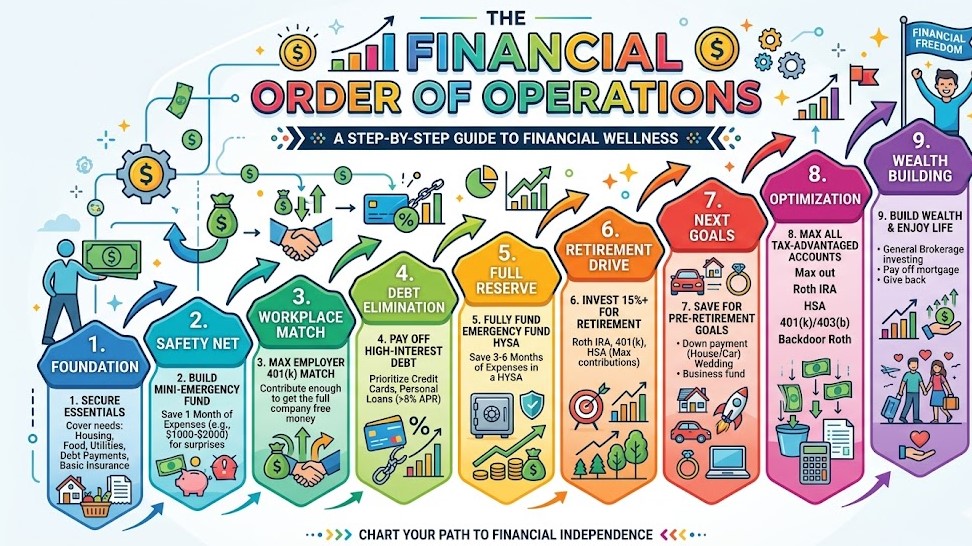
The financial order of operations matters because it gives you a clear, step-by-step system for managing money instead of relying on guesswork or random financial decisions. Most people struggle not because they lack income, but because they don’t know what to prioritize first—saving, investing, or paying off debt. Without structure, money often gets misallocated, which slows down wealth building and increases financial stress over time. This system solves that problem by creating a logical sequence where each financial action builds on the previous one, ensuring maximum efficiency and long-term benefit.
Another important reason this concept matters is that it helps eliminate emotional decision-making. Many people tend to invest when markets are high, save inconsistently, or focus on the wrong type of debt first. The financial order of operations removes confusion by setting a universal priority list, starting from financial safety and moving toward wealth creation. It ensures that you capture free money like employer retirement matches, avoid high-interest debt traps, and build strong financial foundations before taking investment risks. This structured approach not only improves discipline but also accelerates financial independence in a sustainable way.
Secure Your Financial Foundation First
The first step in the financial order of operations is building a basic financial foundation that protects you from unexpected expenses. This step is not about long-term investing or aggressive wealth building—it is about stability. Before you start focusing on growth, you need to make sure that a small emergency situation does not push you into debt. This includes setting aside money for insurance deductibles, minor repairs, or urgent personal needs that can arise without warning.
This foundation works like a financial safety net. Without it, even a small emergency—such as a medical bill or car breakdown—can force you to rely on credit cards or loans, which often come with high interest rates. By having a small buffer in place, you reduce financial stress and avoid interrupting your long-term financial plan. It may seem like a small step, but in reality, it prevents major setbacks and keeps your financial journey stable from the very beginning.
Capture Employer Retirement Benefits
The next step in the financial order of operations is to take full advantage of any employer retirement benefits, especially matching contributions. This is one of the most powerful yet commonly overlooked opportunities in personal finance. If your employer offers a retirement match, it essentially means they are giving you free money based on how much you contribute. Ignoring this step is like leaving guaranteed returns on the table, which can significantly slow down your long-term wealth growth.
This step is important because it provides an immediate return on your contributions without any additional risk. For example, if your employer matches a percentage of your salary in a retirement account, you are automatically increasing your investment value from day one. Many financial experts emphasize that this should be prioritized before paying extra toward low-interest debt or increasing discretionary spending. Capturing this benefit early ensures that your money starts working harder for you from the beginning of your financial journey, setting a strong foundation for future investing success.
Eliminate High-Interest Debt Early
The financial order of operations strongly emphasizes eliminating high-interest debt as early as possible because it is one of the biggest obstacles to building wealth. High-interest debt, such as credit card balances or personal loans with steep interest rates, grows quickly and often outpaces any investment returns you might earn. This means that every month you carry such debt, you are effectively losing money instead of growing it.
Paying off high-interest debt early creates immediate financial relief and improves your cash flow. Once these payments are eliminated, you free up more income that can be redirected toward saving and investing. This step also reduces financial stress, allowing you to focus on long-term goals instead of constantly managing debt obligations. By removing expensive debt first, you create a stronger financial position and ensure that your money is no longer being drained by unnecessary interest payments.
Build a Strong Emergency Fund
Building a strong emergency fund is a crucial step in the financial order of operations because it protects you from unexpected life events that could otherwise derail your financial progress. Once high-interest debt is under control, the next priority is setting aside enough money to cover essential living expenses for a few months. This fund acts as a financial cushion during emergencies such as job loss, medical issues, or urgent home repairs.
A well-funded emergency account provides peace of mind and financial stability. Instead of relying on credit cards or loans during difficult times, you can use your savings without adding new debt. This helps you stay on track with your financial goals even when life becomes unpredictable. Experts often suggest building this fund gradually, ensuring it is easily accessible but separate from everyday spending accounts. With a solid emergency fund in place, you gain confidence and security, which allows you to move forward to more advanced investing and wealth-building steps.
Start Smart Investing (Roth IRA & HSA)
Once your emergency fund is in place, the financial order of operations moves toward smart investing, particularly through tax-advantaged accounts like a Roth IRA and Health Savings Account (HSA). This step is important because it allows your money to grow efficiently while reducing your overall tax burden. Unlike regular savings, these accounts are designed to help you build long-term wealth in a more structured and tax-friendly way.
A Roth IRA is especially powerful because it allows your investments to grow tax-free, and qualified withdrawals in retirement are also tax-free. This means you pay taxes upfront but enjoy long-term benefits without worrying about future tax increases. Similarly, an HSA offers triple tax advantages—tax-free contributions, tax-free growth, and tax-free withdrawals for medical expenses. By starting with these accounts early, you give your investments more time to compound, which significantly increases your financial growth over the years and strengthens your long-term wealth-building strategy.
Maximize Retirement Contributions
The final major step in the financial order of operations is maximizing your retirement contributions once all earlier priorities are completed. At this stage, you are focused on accelerating long-term wealth growth by fully utilizing retirement accounts such as 401(k)s, IRAs, or similar employer-sponsored plans. Increasing your contributions allows you to take full advantage of compound growth, which becomes more powerful the longer your money stays invested.
Maximizing retirement contributions is important because it ensures you are consistently building a strong financial future while benefiting from tax advantages. These accounts are designed to support long-term stability and retirement security, making them essential for anyone serious about financial independence. By increasing your contributions to the maximum allowed limits, you are effectively locking in disciplined savings habits while letting your investments grow steadily over time. This step represents the peak of the financial order of operations, where your focus shifts fully toward long-term wealth accumulation and financial freedom.
Conclusion
The financial order of operations provides a clear and structured path for managing money in a way that maximizes long-term wealth and minimizes financial mistakes. Instead of guessing what to do with your income, this system ensures every dollar has a purpose—starting from building financial safety, capturing free employer money, eliminating expensive debt, and finally focusing on long-term investing and retirement growth. By following this step-by-step approach, you create stability first and then gradually shift toward wealth creation, which makes financial progress more predictable and less stressful.
What makes this system powerful is its simplicity and discipline. Many people struggle financially not because they don’t earn enough, but because they skip important steps or focus on the wrong priorities. The financial order of operations removes confusion and replaces it with clarity, helping you make smarter decisions at every stage of life. Over time, this structured approach builds consistency, improves savings habits, and significantly increases your chances of achieving financial independence.
FAQs
1. What is the financial order of operations?
It is a step-by-step system that tells you how to prioritize saving, investing, and debt repayment to build wealth efficiently.
2. Why is it important to follow financial order of operations?
It helps you avoid financial mistakes and ensures your money is used in the most effective way possible.
3. Should I invest before paying off debt?
Usually no—high-interest debt should be cleared first because it grows faster than most investment returns.
4. What comes first in the financial order of operations?
A basic emergency buffer and employer retirement match are typically the first priorities before investing heavily.
For More Updates Visit: blogangle