 By Mary Sun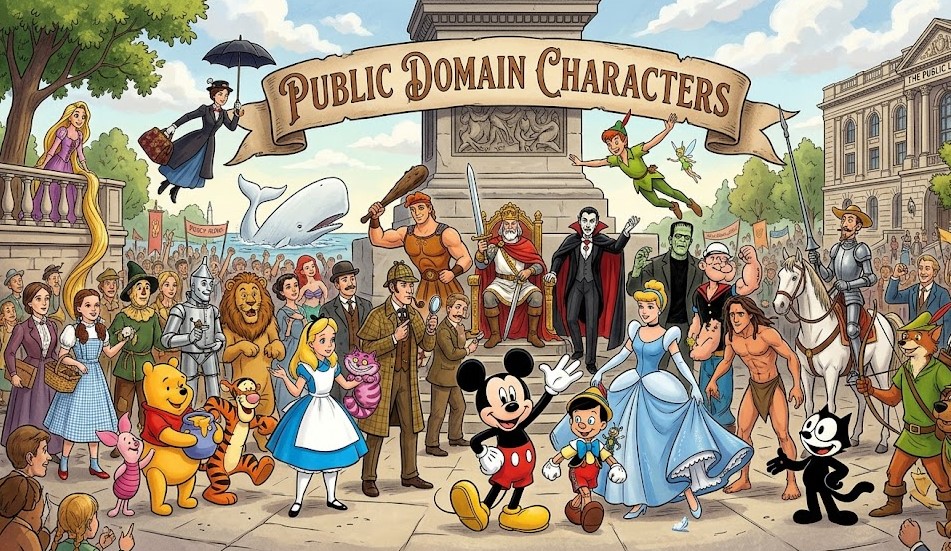
Public domain characters are fictional figures whose original copyright protection has expired or no longer applies, making them free for anyone to use without needing permission or paying licensing fees. These characters often come from classic literature, folklore, and early storytelling traditions that were created many decades or even centuries ago. Because they are no longer owned by any single individual or company, they become part of a shared cultural resource that creators around the world can freely access and adapt. This means writers, filmmakers, game developers, and artists can build new stories using these characters without legal restrictions tied to the original creator. However, even though the original character is free to use, newer versions or adaptations may still have separate protections.
How Public Domain Characters Become Free to Use
Public domain characters become free to use when their copyright protection expires under intellectual property laws. In most countries, copyright lasts for a specific number of years after the death of the original creator, and once that period ends, the work automatically enters the public domain. At that point, the characters from those works can be reused, modified, or reinterpreted without requiring permission. In some cases, creators may also voluntarily release their work into the public domain, allowing immediate free use. This process ensures that creative works eventually become part of the public cultural heritage, encouraging new storytelling and innovation while preserving classic characters for future generations.
Famous Public Domain Characters List
There are many well-known public domain characters that are widely used in modern entertainment and media. Some of the most famous include Sherlock Holmes, Dracula, Frankenstein’s Monster, Robin Hood, Alice from Wonderland, and early versions of Peter Pan. These characters originate from classic novels, folklore, and early literature that are no longer under copyright protection. Because of this status, creators across the world can freely adapt them into movies, books, comics, and video games. However, it is important to remember that while the original versions are public domain, some modern interpretations may still be copyrighted. This is why different adaptations of the same character can look and feel very different depending on the creator’s vision.
Why Creators Use Public Domain Characters
Creators use public domain characters because they provide a strong foundation for storytelling without the need for licensing or legal approval. Since these characters already have established backgrounds and cultural recognition, writers and filmmakers can focus more on developing new plots, themes, and interpretations rather than building everything from scratch. This saves both time and money, making it especially useful for independent creators and smaller studios. Additionally, public domain characters allow for creative freedom, as they can be reimagined in modern, futuristic, or completely different settings. This flexibility is one of the main reasons they remain popular in entertainment industries.
Legal Rules You Must Know
Even though public domain characters are free to use, there are still important legal rules that creators must understand. While the original version of a character may be in the public domain, newer adaptations, designs, or story elements may still be protected by copyright or trademark laws. This means that using a character does not always allow copying modern interpretations from movies, shows, or books. Creators must carefully ensure they are using only the public domain elements and not infringing on newer protected material. Understanding these differences is important to avoid legal issues while working with public domain content.
Case Study: Modern Use in Media
A strong example of public domain characters being used in modern media is Dracula, originally from Bram Stoker’s novel. Since the character is in the public domain, filmmakers and writers have created countless versions of Dracula in movies, television series, and video games. Each adaptation brings a new interpretation while still based on the original character concept. Another example is Sherlock Holmes, who has appeared in numerous modern detective stories and films with different styles and settings. These case studies show how public domain characters continue to inspire creativity and remain relevant in today’s entertainment industry.
Advantages and Limitations
The main advantage of public domain characters is that they offer complete creative freedom, allowing anyone to use them without paying fees or seeking permission. This encourages innovation and makes storytelling more accessible to independent creators. They also help preserve cultural history by keeping classic characters alive in modern formats. However, there are also limitations. While the original characters are free to use, modern versions may still be protected by copyright or trademarks. This can sometimes restrict how they are used in new projects. Despite these limitations, public domain characters remain a valuable resource for creative industries worldwide.
Conclusion
Public domain characters play an important role in storytelling by allowing creators to freely use and adapt classic fictional figures without legal barriers. They support creativity, innovation, and cultural preservation by keeping iconic characters alive in new forms of media. While they offer many advantages, creators must still be careful about legal boundaries related to modern adaptations. Overall, public domain characters continue to shape literature, film, and entertainment in powerful ways.
FAQs
What are public domain characters?
They are fictional characters free for public use because their copyright has expired.
Can I use public domain characters freely?
Yes, but only their original versions, not modern adaptations.
Why are public domain characters important?
They allow free creativity and inspire new stories across media.
Are all old characters in the public domain?
No, only those whose copyrights have expired or were released into the public domain.
For More Updates Visit: blogangle