
 By Qamer Javed
Key Takeaways
- Smart pricing tools use AI to analyze global and local market data, enabling hotels to dynamically adjust room prices.
- Real-time pricing strategies help hotels respond instantly to demand shifts, boosting competitiveness and profitability.
- AI-driven revenue management solutions automate complex tasks, allowing staff to focus on strategic initiatives and guest service.
In today’s dynamic hospitality industry, hotels are leveraging technology to improve profitability and guest experiences. The rise of automated hotel dynamic pricing software is enabling revenue managers to make faster, more informed pricing decisions based on real-time data and artificial intelligence. This shift is helping hotels keep pace with the evolving market and drive growth by making the most of every opportunity.
Intense competition, fluctuating demand, and rapidly changing consumer expectations make traditional rate-setting methods less effective. Now, smart pricing tools powered by machine learning give hotels the agility to respond instantly to changes, maximizing revenue while delivering better value to guests. As the market becomes more complex, these solutions serve as a key differentiator for hotels looking to excel in revenue management.
Early adopters are already seeing measurable improvements in performance and efficiency while reducing the risks associated with manual approaches. Revenue leaders find that automated pricing systems free up staff for higher-level strategy work, allowing them to understand big-picture trends and guest dynamics rather than managing data entry and endless spreadsheets.
While more advanced adoption means some challenges, such as training and data quality, most hospitality leaders recognize that embracing innovation is critical for long-term success and resilience. With smart pricing tools, hotels are better prepared for external shocks, from local events to global disruptions.
The Shift from Traditional to AI-Driven Pricing Models
In the past, hotels set nightly rates primarily based on historical data and seasonal forecasts. These methods, while useful in static environments, fail to capture today’s market fluctuations, where guest demand can change quickly due to trends, holidays, or local events. AI-driven pricing models represent a fundamental advancement. They incorporate not just historical figures, but also live data from dozens of sources, including social media, booking pace, competitor rates, and broader economic indicators.
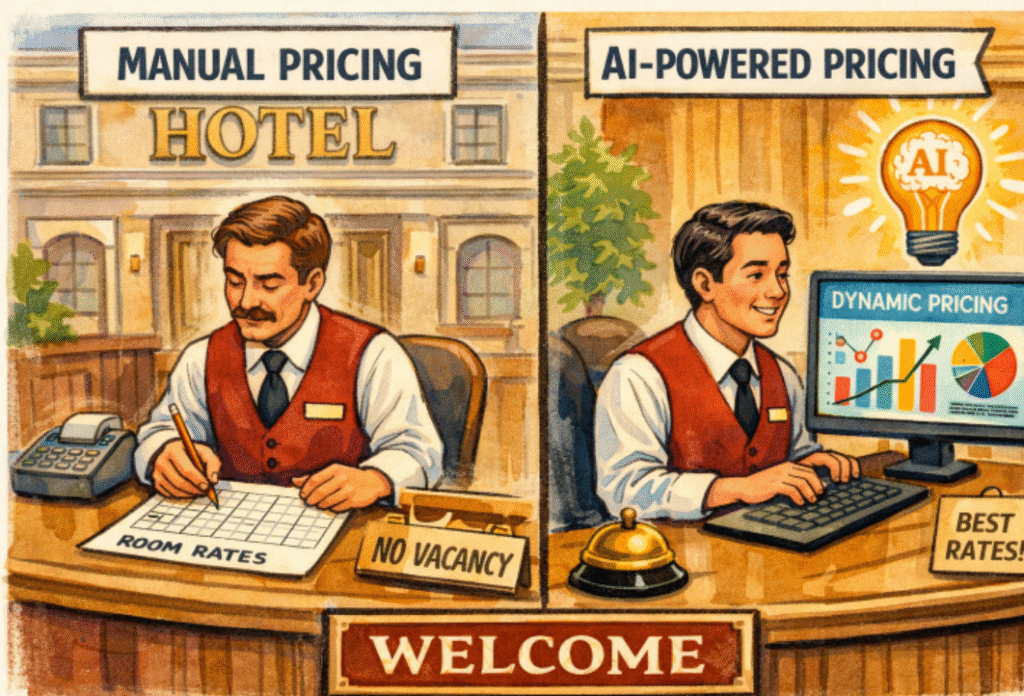
This new approach replaces labor-intensive spreadsheet work and manual adjustments with continuous data-driven recalibration. According to Forbes, AI-powered tools help organizations move beyond guesswork, ensuring that decisions align with real-time market realities and guest expectations.
Benefits of Implementing Smart Pricing Tools
- Enhanced Forecasting Accuracy: Smart pricing software can sift through millions of data points instantly, recognizing patterns and predicting occupancy and demand spikes with greater accuracy than legacy systems.
- Operational Efficiency: Automated revenue management reduces the need for constant manual intervention. This efficiency gives staff more time to focus on guest experience and strategic planning.
- Increased Revenue: Dynamic, real-time price adjustments help hotels maximize yield during high demand and stay competitive during soft periods, ultimately increasing revenue per available room (RevPAR).
Real-Time Pricing: A Game Changer
The ability to change rates instantly, rather than daily or weekly, is a turning point for the industry. Real-time pricing means that if a major event is announced in your destination or if a competitor changes their rates, your hotel can respond immediately. This agility prevents lost revenue from underpricing and protects against pricing too high during periods of lower demand.
Hotels using these tools are already seeing a step-change in performance. Modern systems integrate with property management systems and central reservation platforms, enabling rate changes to propagate swiftly and reducing friction and delays. Leading travel publications such as Forbes have reported that dynamic, real-time pricing is driving double-digit revenue increases for progressive hospitality businesses.
Case Study: AI Integration in Revenue Management
Consider a mid-sized city hotel that shifted to an AI-powered revenue management solution. Within months, the property experienced a 15% increase in RevPAR compared to the same period the previous year. The system’s ability to process bookings, competitor rates, and real-time shifts in local demand allowed the hotel to identify periods of unexpected demand, so it could confidently raise rates and capitalize on peak opportunities.
Staff spent less time in spreadsheets and more time analyzing broader booking trends, driving new marketing efforts, and focusing on enhancing guest experiences. This case echoes results from similar properties where real-time decision-making created a competitive edge in crowded markets.
Challenges and Considerations
- Initial Investment: The upfront expense for smart platforms can be significant, especially for independent hotels or small groups. However, most hoteliers report substantial ROI, given the revenue lift and operational streamlining.
- Staff Training: Teams must adapt to new interfaces and analytical insights, requiring ongoing investment in education and change management.
- Data Quality: Successful AI pricing depends on accurate, comprehensive data input. Incomplete or outdated information can reduce the reliability of price recommendations and forecasts.
Future Outlook
AI and machine learning are expected to continue evolving, enabling hospitality revenue leaders to forecast demand, identify booking patterns, and respond to market changes with greater precision. Hotels that adopt these technologies early gain a competitive advantage by building more flexible, data-driven, and future-ready operations. As digital transformation accelerates across the industry, systems for pricing, distribution, and guest engagement will become increasingly interconnected. This seamless integration allows real-time adjustments that improve occupancy, maximize revenue, and enhance guest satisfaction. Ultimately, technology will continue to serve as a foundational element in modern hospitality management strategies and long-term business success.
Conclusion
Smart pricing tools are revolutionizing hotel revenue management by enabling more dynamic and responsive pricing strategies. Using AI-powered algorithms and real-time data analysis, hotels can adjust room rates based on demand, seasonality, competitor pricing, and local events. This allows properties to maximize occupancy while optimizing revenue per available room. Beyond pricing efficiency, these systems help hoteliers forecast demand more accurately and make faster, more informed decisions. As guest expectations become more personalized and market conditions grow increasingly volatile, adopting smart pricing technology is no longer optional. It is a critical factor for maintaining competitiveness, improving profitability, and ensuring long-term success in hospitality.