
 By Freddie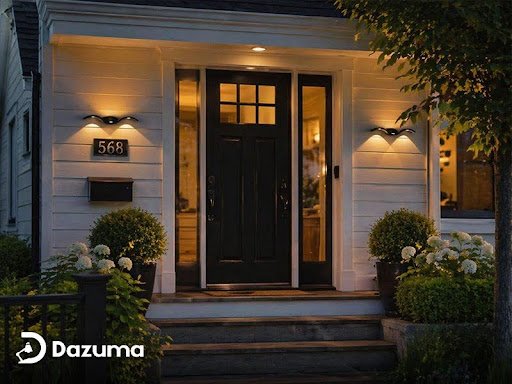
The first impression of a home does not disappear when the sun goes down. In fact, after dark, lighting becomes one of the most important elements shaping how a property looks and feels.
A carefully lit entrance can make a home appear warmer and more welcoming, while a dark driveway, poorly lit pathway, or harsh security light can have the opposite effect. Outdoor lighting is therefore about more than simply making it easier to see at night. It can help define architectural features, guide visitors, improve the usability of outdoor spaces, and create a stronger sense of arrival.
The good news is that improving outdoor lighting does not always require a complicated landscape renovation. A few well-chosen fixtures in the right locations can make a noticeable difference.
Thoughtful outdoor lighting can make a home feel more welcoming while helping visitors navigate the property after dark.
Start With the Entrance
The front entrance is usually the most important place to begin.
Visitors naturally look for visual cues that show them where to walk and where the main door is located. Wall sconces beside the door, an overhead porch light, or subtle pathway lighting can all help create that visual direction.
The goal should not be to flood the entire front of the house with light. Instead, think about creating layers.
The entrance can be slightly brighter than the surrounding landscape, while softer lighting along paths and planting areas provides supporting illumination. This creates depth and makes the property feel intentional rather than overlit.
Warm light is often especially effective around residential entrances because it tends to create a comfortable and inviting atmosphere.
Give the Driveway a Clear Visual Anchor
Long or dark driveways can sometimes make a property difficult to locate at night. This is particularly noticeable in suburban or rural areas where street lighting may be limited.
Adding a vertical lighting element near the beginning of the driveway can help solve the problem while also adding architectural character.
A traditional or modern lamp post can act as both a practical light source and a visual landmark. Instead of leaving the driveway entrance almost invisible after sunset, a properly positioned post light helps define where the property begins.
Scale matters here.
A fixture that is too small may disappear into the landscape, while an oversized one can look more like commercial street lighting. Consider the height of the house, width of the driveway, nearby landscaping, and distance from the road when deciding what feels proportionate.
Use Pathway Lighting for Guidance, Not Decoration Alone
Path lights are popular because they can quickly improve the appearance of a front yard, but their main purpose should still be functional.
Place them where people actually need help navigating.
Steps, changes in elevation, curves in a walkway, and transitions between the driveway and entrance are usually more important than evenly spacing fixtures along every few feet of a path.
Too many lights can create a runway effect, with identical fixtures forming two bright rows toward the house. A more natural approach is often to stagger the lights and use only as many as necessary to make the route easy to follow.
Good pathway lighting should quietly guide people rather than becoming the main feature of the landscape.
Highlight Architecture Selectively
Outdoor lighting can also reveal details of a home that disappear at night.
Stone walls, columns, textured brick, trees, and distinctive rooflines may all benefit from carefully positioned accent lighting. Uplighting can emphasize vertical features, while downlighting can produce a softer effect that resembles natural moonlight.
However, trying to illuminate every architectural feature usually reduces the impact.
Choose one or two focal points instead.
For example, a mature tree in the front yard might become an attractive nighttime centerpiece, while a textured exterior wall can gain additional depth through gentle illumination.
This approach keeps the lighting balanced and prevents the front yard from feeling like a commercial display.
Think About How Outdoor Areas Are Actually Used
Lighting plans are often created based entirely on appearance, but everyday behavior should influence the design as well.
Consider questions such as:
- Where do family members normally enter the house?
- Where do guests park?
- Are there stairs between the driveway and front door?
- Is the patio regularly used after sunset?
- Are trash bins, side gates, or storage areas accessed at night?
The answers may reveal areas that need lighting more urgently than decorative spaces do.
For example, a side entrance may deserve more attention than a flower bed simply because someone walks through it every evening.
Planning around real movement patterns usually results in a lighting system that feels more useful and natural.
Keep Different Fixtures Visually Connected
Outdoor lighting does not need to come from a single matching collection, but the fixtures should share some visual relationship.
Repeating finishes, shapes, materials, or general design language can help everything feel coordinated.
A very traditional lantern beside the front door may look disconnected from extremely minimalist post lights unless another design element helps bridge the styles.
This does not mean every fixture needs to look identical. In fact, mixing fixture types can produce a more interesting result.
The key is consistency rather than duplication.
Homeowners exploring different styles can compare outdoor and indoor lighting options from retailers such as Dazuma Lighting to get a better sense of how finishes, shapes, and fixture proportions might work together throughout a property.
Avoid the Temptation to Make Everything Brighter
One of the most common outdoor lighting mistakes is assuming that brighter automatically means better.
It does not.
Excessively bright fixtures can create glare and make nearby dark areas appear even darker because the eyes need time to adjust between different light levels.
Residential outdoor lighting generally works best when light is distributed across several purposeful locations rather than coming from one extremely powerful fixture.
The objective is comfortable visibility.
If people can recognize the entrance, see steps clearly, navigate pathways safely, and enjoy the appearance of the landscape without being blinded by the fixtures, the lighting is doing its job.
Consider the View From Inside the House
Outdoor lighting is usually planned from the street or yard, but it is also worth looking through the windows from inside.
At night, illuminated trees, garden features, or softly lit patios can become part of the home’s interior view.
This is particularly useful around living rooms, dining rooms, and kitchens with large windows.
Instead of looking out at a completely dark yard or seeing only the reflection of the room in the glass, thoughtful landscape lighting can extend the visual space beyond the walls of the house.
It is a small design consideration that can significantly change how a room feels after sunset.
Conclusion
Outdoor lighting has a larger influence on a home’s nighttime character than many homeowners realize.
A clear entrance, gently illuminated pathways, well-proportioned driveway lighting, and a few carefully chosen architectural accents can make the property easier to navigate while improving its overall appearance.
The most successful lighting plans rarely depend on using the greatest number of fixtures or producing the most light. They depend on placing the right type of light where it serves a clear purpose.
Start with the way people approach and use the property, identify the areas that genuinely need illumination, and then add decorative lighting selectively.
When function and appearance are considered together, outdoor lighting can turn an ordinary arrival home into a far more welcoming experience.